
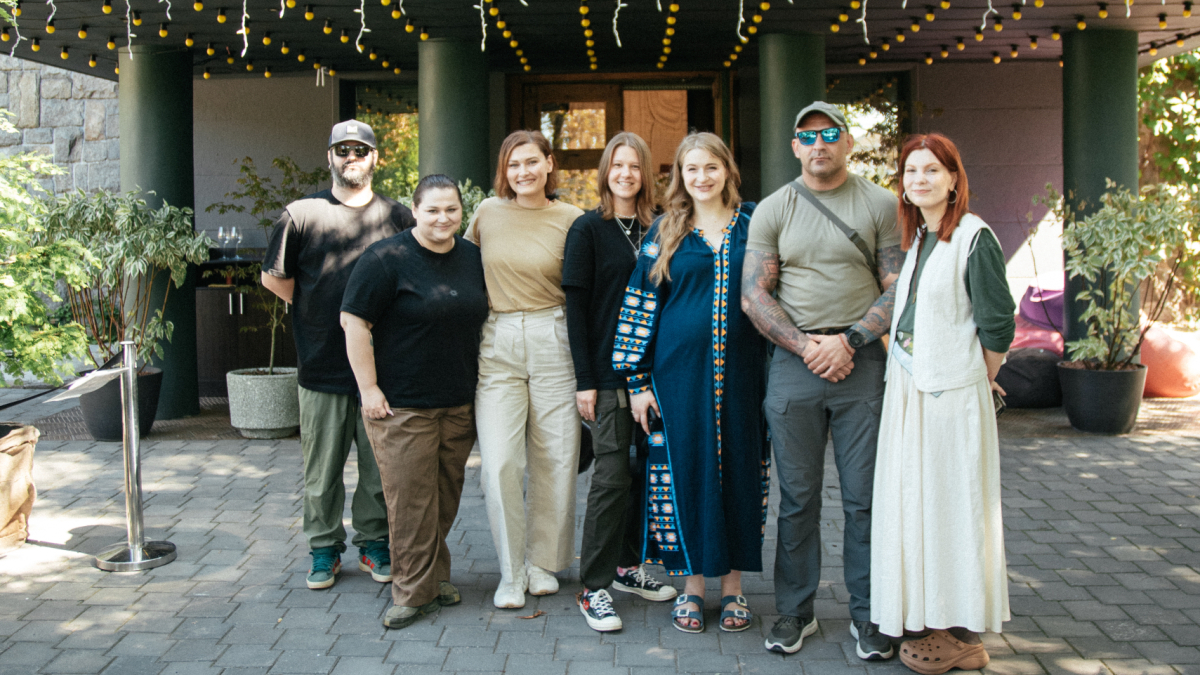
The first cohort of the Care Company Support Services School completed their training — a course U4Heroes launched in partnership with AZOV.Suprovid.
Why the School?
Support services (also known as patronage services) are specialized units within Ukraine’s Security and Defence Forces that work with service members and their families at critical stages: after injury, during treatment and rehabilitation, through military medical assessments and other procedures, in cases of captivity, disappearance, or death, as well as when service members are preparing to leave the military. Although these services have been part of the official staffing structure of all units since 2024, their teams still lack clear procedures and principles for their work, and the level of development varies significantly across units. Some teams have several years of practical experience, while others are only beginning to establish their services.
Care Company became the first large-scale school for support service professionals, combining training, visits to partner organizations, networking with other support service teams, and learning from experienced professionals. Participants will also receive funding to establish and develop their own support services.
What Did the Training Look Like?
The 12-day program took place in person, with expertise and practical experience shared by AZOV.Suprovid, human rights organizations (Pryntsyp, Legal Hundred), specialized rehabilitation centers (Recovery, Superhumans, Lisova Poliana), charitable and veteran organizations (Svoi, Veteran Hub), as well as service members and veterans who have experienced support services firsthand.
The training covered the key areas of support service work: building and developing a team, supporting wounded service members and former prisoners of war, working with the families of fallen and missing service members, psychological recovery and readaptation, communications, and fundraising.
The program was built around a case-based approach. Theoretical sessions were combined with analysis of real-life situations, practical assignments, and direct engagement with organizations and professionals working with the relevant groups of beneficiaries.
The School’s first cohort brought together 40 participants from 16 units of Ukraine’s Defence Forces, including nine units of the Armed Forces of Ukraine, six units of the National Guard of Ukraine, and one unit of the Defence Intelligence of Ukraine.
Early Results of School 1.0
Overall, participants rated the usefulness of the course 4.48 out of 5, with 88.9% of all ratings being 4 or 5.
Participants found the topics most directly related to their day-to-day work the most useful: supporting wounded service members, rehabilitation and prosthetics; legal matters, military medical assessments, expert evaluations of functioning, benefits and discharge from service; personnel matters; partnerships; systematizing their work; and practical procedures.
One important early outcome was the shift from general reflection to concrete action plans. After the training, participants planned to establish connections with hospitals, build referral databases, review problematic procedures, develop clear protocols, update their regulatory resources, share knowledge with colleagues, systematize internal databases, and strengthen their teams through recruitment.
The most important stage of the School is still ahead: putting the knowledge gained into practice. To help make this happen, participants will receive mentorship and financial support to establish and develop their support services.